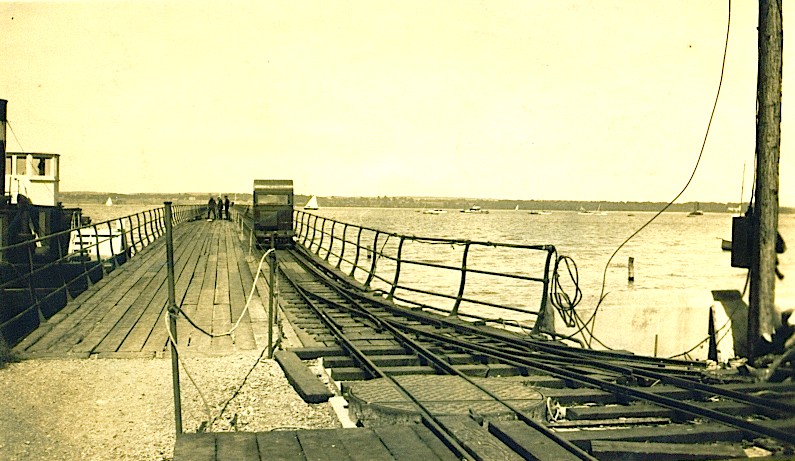
Hythe Pier Train
100 years of service
In 1917, the Ministry of Munitions placed an order for six battery‑powered tractor units for use at its First World War munitions factories. Three of these were built by Brush Locomotives of Loughborough and delivered to Avonmouth, near Bristol, where they were used to move mustard gas and other hazardous chemicals around the site.
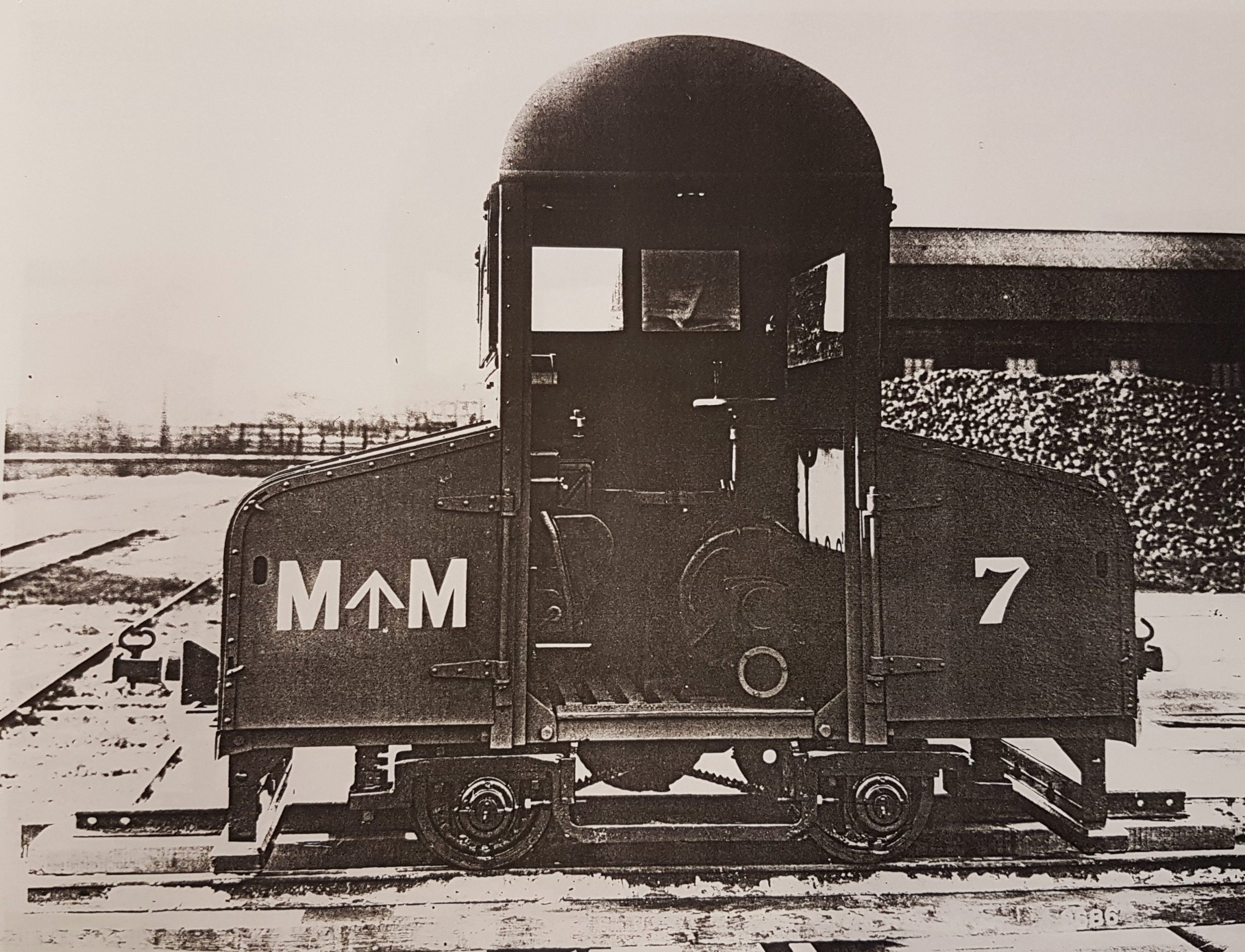
When the war ended, the Ministry of Munitions (marked as “MⁿM” on the photograph) put the three Avonmouth tractors up for sale. Several months of negotiation followed before the ministry agreed to a reduced price—sweetened by the inclusion of a spare set of batteries.
The post‑war ambitions for these machines proved more optimistic than practical, and it wasn’t until 1922 that they finally entered service for the public.
Hythe Pier Museum is Run by Volunteers & Public Donations

We're going to need more electricity
The original tractors operated on 100‑volt batteries, and the intention was to use the same system on the pier. Early tests showed it worked, but an internal report noted that the pier “wobbled” under the weight of the batteries. Gerald Yorke, the consulting engineer, proposed a solution he had already seen on the London Underground: remove the batteries from the vehicles entirely and install a third electric rail along the track, fed from the shore.
The original battery system allowed the voltage to be switched between series and parallel to give a gentler starting voltage. The new third‑rail supply couldn’t do this, so a large air‑cooled resistor—described as looking more like a radiator—was fitted to limit the starting current.
Another challenge was voltage drop along the full length of the pier. The fix was to raise the supply to 200 volts. The motors tolerated the increase without modification, and the extra voltage conveniently doubled the available power from 2.75 HP to 5.5 HP.
Running an electric railway in 1922 was ambitious in itself, but doing so in Hythe—where mains electricity didn’t arrive until around 1929—was remarkable. Fortunately, the Ministry of Munitions was also selling off surplus generators, and Yorke had previously operated a battery‑charging business in London. For several years, Hythe’s shops were powered by excess electricity from the pier.
Additional claims to fame include;
- Royal Mail Train — The Hythe Pier Train once carried postal bags to and from Southampton before road links improved.
- Last scheduled narrow‑gauge freight train in the UK — Every Tuesday morning, it still hauls a fuel bowser down the pier to supply the ferry.
Weird Train Facts & Questions
Have a look at the bogies on the carriages, they appear to be upside down?
The carriage bogies look upside down because the axles were deliberately mounted above the bogie frame. This unusual arrangement served two purposes:
-
Lower centre of gravity — reducing the effect of crosswinds on the exposed pier.
-
Lower platforms — making boarding easier for passengers.
The trade‑off is that the wheels sit inside the seat bases, which is why the seating layout is so distinctive.
Have a look at the controller in the tractor itself.
The controller labels aren't a simple FORWARD and REVERSE. This wasn’t a mistake. The chosen labelling made the direction of travel unambiguous when driving a straight line.
Spot the difference
The “7” visible in the top photograph is the final digit of the electric motor’s serial number. Hythe’s two surviving motors are: 16302 and 16307.
A subtle detail helps identify which tractor is which. The roof has a transverse seam:
- One tractor has the seam centrally placed, dividing the roof evenly - 16302 is EVEN.
- The other tractor has the seam offset, creating two uneven roof panels - 16307 is ODD. It's also possible that the "7" marked on various bits of train could have easily been mistaken for a "1", but that doesn't break the rule as tractor "1" is in fact "16307".
Match the seam to the number, and you can then identify the unit in almost any historic photograph.