


Before the Ferry
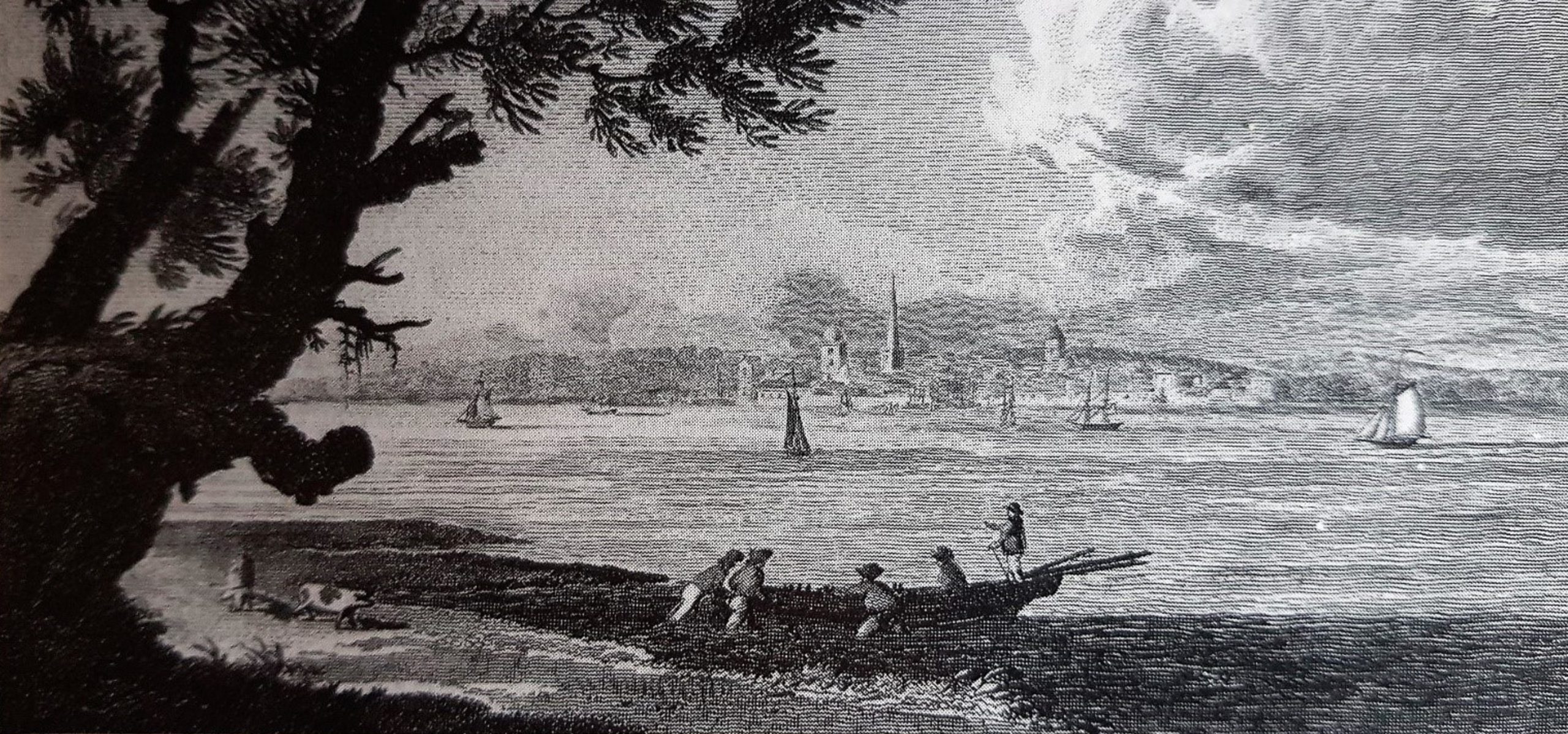
For hundreds of years, a variety of small vessels — both sail‑powered and rowed — would have crossed this same route. The illustration from around 1575 shows a wherry boat setting off toward Southampton in the distance. We also know that Jane Austen travelled to Hythe on 15 September 1807, long before there was any mention of a pier or an organised ferry service.
Once the Act of Parliament was passed to construct a pier, landing tolls were introduced and the wherrymen were required to hold licences. This marked the beginning of the decline of the small, independent boats and the rise of larger, scheduled ferries.
Hythe Pier Museum is Run by Volunteers & Public Donations

Hythe Ferry
This very early photograph of the pier shows its clean, uncluttered design — no central railings, no lighting, just two obelisks — with the original stone pier and quay visible to the left. The early paddle steamers had a central wheelhouse, and rather than attempt to turn in tight spaces, they were designed to operate facing either direction. It’s a practical idea that would later be echoed in the design of the pier train some 50 years on.
As this image shows, paddle steamers were ideal for working in shallow water and remained in service until the arrival of the deep‑water pontoon and the connecting pier train.
Hythe Ferry
A long heritage
Records show that more than 30 different vessels have operated on the Hythe–Southampton route over the past 150 years.
Over that time, the service has also welcomed a variety of visiting private boats, carrying everyone from Tuesday market‑goers to members of the Royal Family.
The pier has had its fair share of unwelcome visitors as well, including a dredger that sliced the pier in two, a landing craft training for D‑Day, several stray yachts, and even pirates who came ashore to steal electrical cables.
