


Hythe Pier
Why we ended up with the cheap one
The shoreline on the southwest side of Southampton Water is largely made up of shallow mudflats, with one notable exception: a small spit of hard gravel created over centuries as material washed down from the Dibden hills. The road outside the pier was once known as Bridge Street, and Hythe’s main shopping area is still called “the Marsh” — both clues to the former watercourse that shaped the hard.
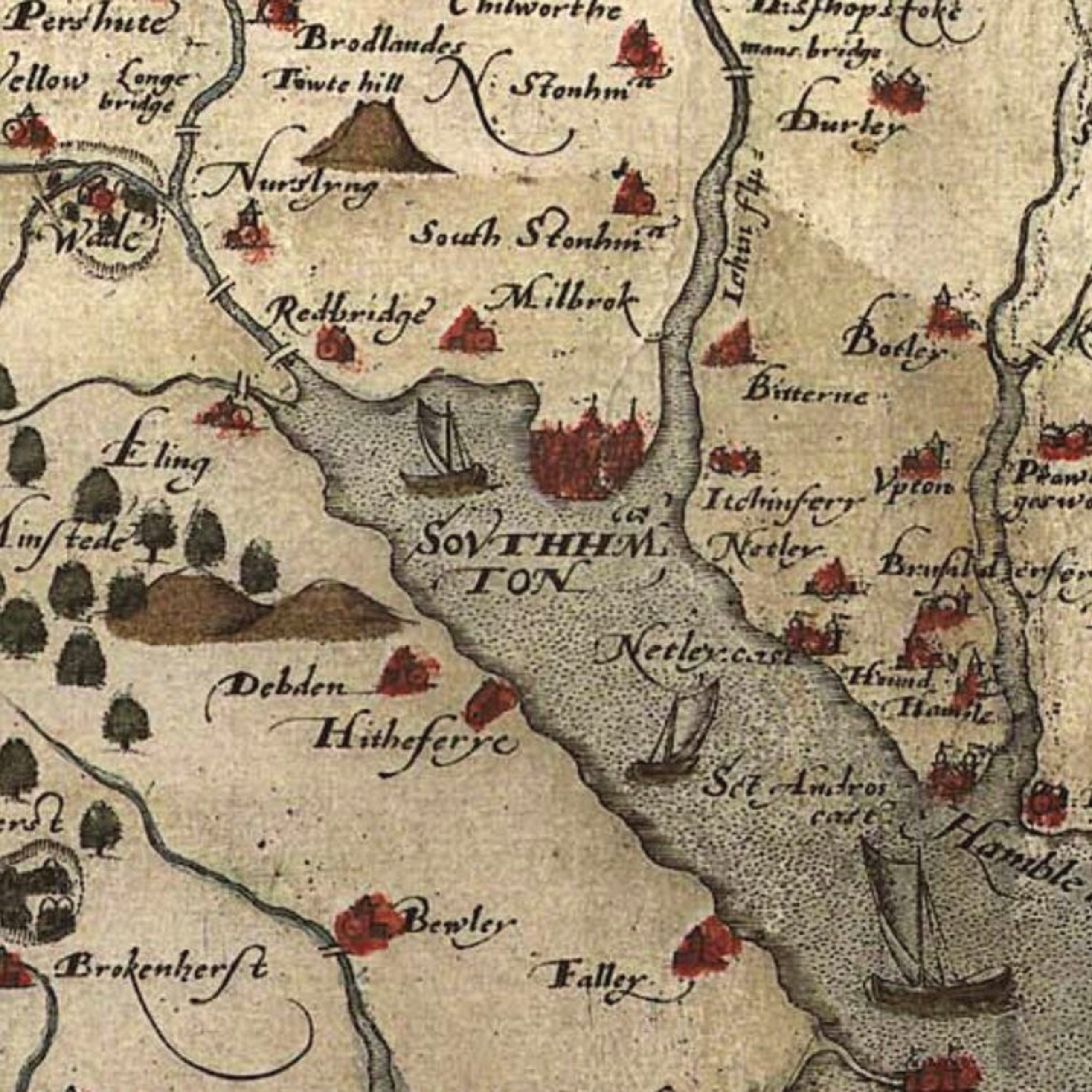
The Hythe Ferry (or “Hitheferye”) first appears on Saxton’s map of 1575, more than 300 years before the present pier was built. At that time, passengers would walk — or, according to some accounts, be carried — across the hard to reach the waiting wherry boats.
In 1841, an Act of Parliament, supported by local landowners, authorised the construction of a small stone pier at Hythe. This original pier still exists today as the road immediately north of the current pier and now serves as parking for the local garage.
The stone pier allowed the first true ferries to land much larger loads at high tide, bringing goods directly onto the quayside.
Hythe Pier Museum is Run by Volunteers & Public Donations
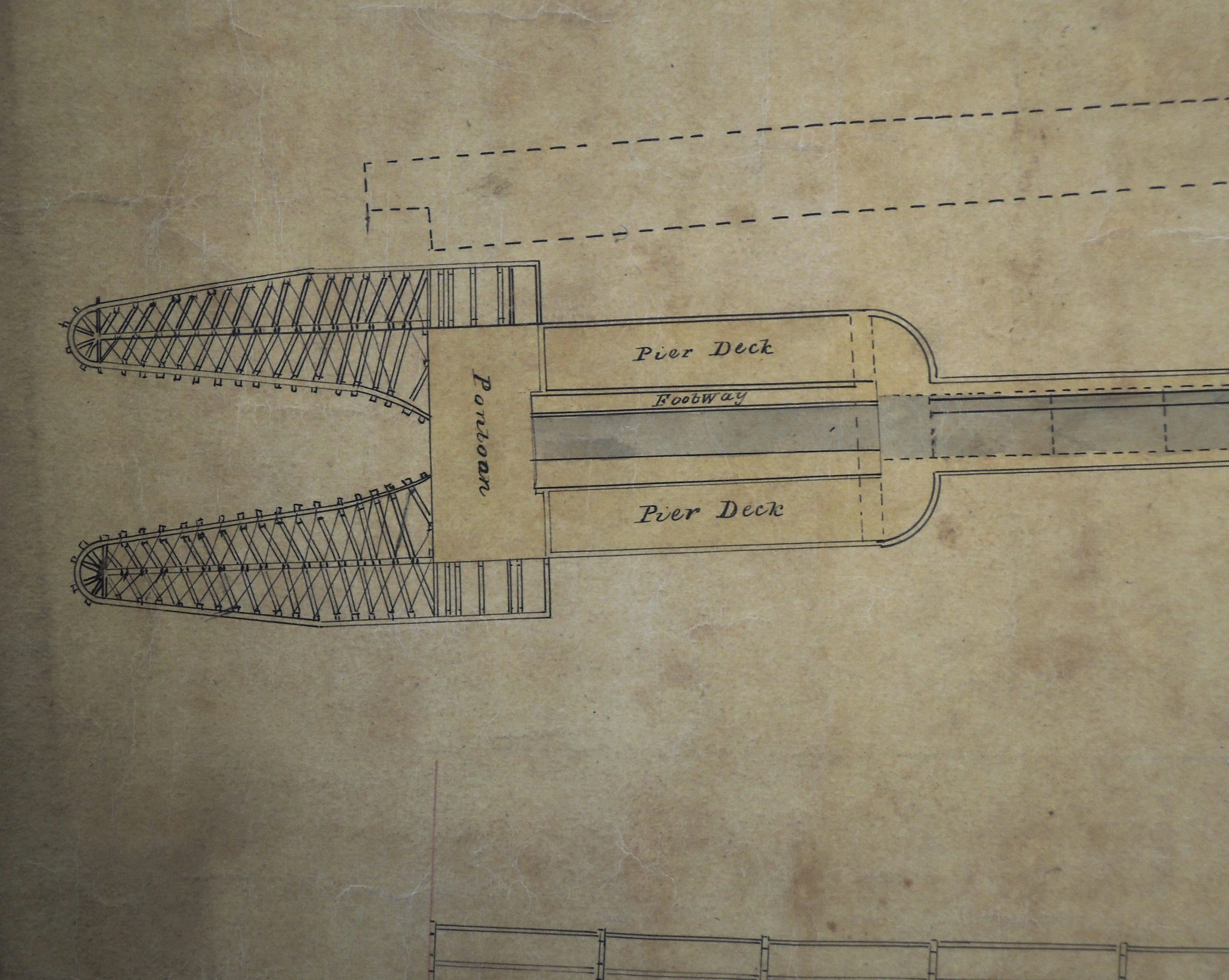
The Second Hythe Pier
The success of the first stone pier inspired a far more ambitious proposal: a long pier with a tramway and a double floating pontoon at the deep‑water end. Unfortunately, the scheme proved too costly and ultimately failed.
A later Act of Parliament put forward a much simpler design — no tramway, no landing stages, no pontoons. Just a straightforward, functional pier built to a tight budget. This third, no‑frills pier opened in 1881, and remarkably, it is the one that still stands today.
The Third Hythe Pier
Keep it simple
Walking 2,100 feet to board a ferry soon came to be seen as rather too much effort, so a series of landing stages were built along the length of the pier. We often refer to them as “bus stops,” as the ferry would sail in and pick up passengers at these points whenever the tide allowed. However, this still meant that passengers might have to walk the planks to reach the boat.
In 1909, a more practical solution was introduced: tracks were laid into the left side of the pier, and the pier porter would push customers along on a small truck to meet the ferries.
After the First World War, an even better idea was on the horizon — and it fell to Gerald Yorke to make it a reality.
